Address
Room 2301C, 23rd Floor, Building 1, jinghu Commercial center, No, 34, Liangzhuang Street, Eri District, Zhengzhou City, Henan province
Woours
Monday to Friday: 7AM - 7PM
Weekend: 10AM - 5PM
Address
Room 2301C, 23rd Floor, Building 1, jinghu Commercial center, No, 34, Liangzhuang Street, Eri District, Zhengzhou City, Henan province
Woours
Monday to Friday: 7AM - 7PM
Weekend: 10AM - 5PM

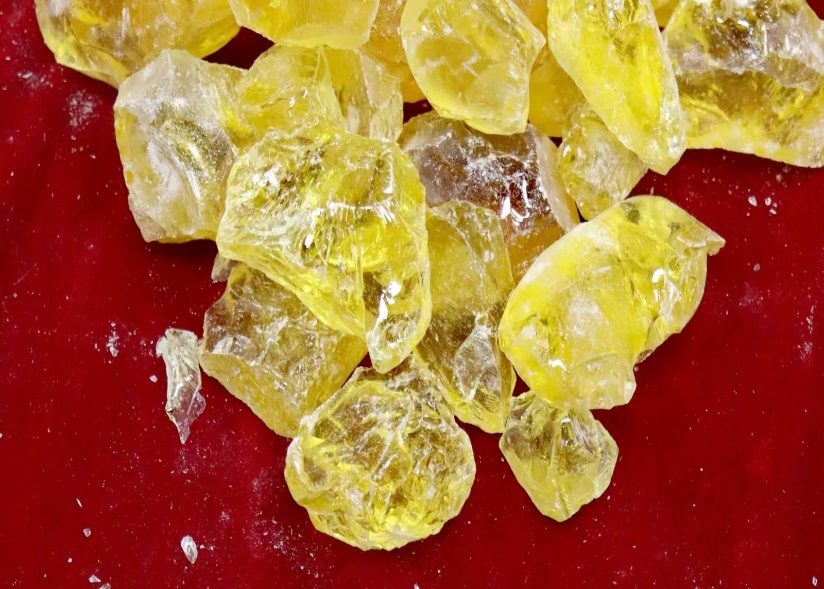
A precursor is a state that exists before it is converted into the final product state. A ceramic precursor can be regarded as a precursor of ceramics, which can be converted into corresponding ceramics through light, heat, radiation and other means.
During the synthesis phase, precursors can be engineered to incorporate various elements through molecular design, creating a variety of molecular structures. This allows for a wide variety of precursor forms, ranging from small molecules to macromolecules, solids to liquids. By combining precursor synthesis with the regulation of the ceramicization process, we can design the desired ceramic product.
Why use ceramic precursors?
Ceramic precursors can be used to produce advanced ceramic materials with excellent properties such as high hardness, high strength, high temperature stability, chemical stability, insulation, and wear resistance.
Furthermore, compared to advanced ceramic materials, ceramic precursors can be processed using a variety of molding processes, such as injection molding, ion evaporation deposition, and spray drying, allowing for the preparation of ceramic materials in a variety of forms, including thin films, coatings, fibers, and porous bodies. Therefore, the use of ceramic precursors can meet the specific needs of diverse fields, such as electronics, optoelectronics, medicine, and energy.
Therefore, the use of ceramic precursors can produce high-performance, multi-form ceramic materials, expanding the application range of ceramic materials and meeting the special needs of different fields.
Ceramic precursors have different synthesis processes from advanced ceramics and have obvious advantages over advanced ceramics:
Types of ceramic precursors
1). Ultra-high temperature ceramic precursor
Ultra-high-temperature ceramics generally refer to a class of specialized ceramic materials with melting points exceeding 3000°C that maintain stable physical and chemical properties in extreme environments. These extreme environments are characterized by a combination of high temperatures, reactive atmospheres (such as atomic oxygen and plasma), mechanical loads, and wear. Ultra-high-temperature ceramics, including transition metal borides, carbides, nitrides, and their composites, are considered the most promising candidate thermal protection materials for nose cones and leading edges of hypersonic and atmospheric reentry vehicles.
A class of polymers that can be pyrolyzed to form ultra-high-temperature ceramics such as metal carbides and borides (ZrC, ZrB2, HfC, HfB2). Zirconium carbide and boride ceramic precursors are common, with the main synthesis routes being sol-gel, polymer precursors (including metal-organic polymers and metal-hybrid polymers), and organic-inorganic hybrids.
Ultrahigh-temperature ceramic precursors possess excellent heat, corrosion, and wear resistance and are widely used in high-temperature environments, such as aerospace. They can be used as substrates for ceramic-based composites and in new applications such as the preparation of ceramic coatings, ceramic fibers, ceramic adhesives, and ceramic powders, promising broad future applications.
2). Polycarbosilane (PCS)
A general term for a class of polymers containing alternating bonds between silicon and carbon atoms, which yield SiC ceramics upon pyrolysis. These polymers are widely used in the preparation of nano-ceramic powders, ceramic films, coatings, porous ceramics, and other materials. Common methods for synthesizing polycarbosilanes include dechlorination and pyrolysis rearrangement, ring-opening polymerization, condensation polymerization, and hydrosilylation.
| Serial number | Items | Indicator |
| 1 | Appearance | A mixture of colourless or light yellow lumps and powders, of which the powder should be free from agglomerates |
| 2 | Softening pointe | 180℃~235℃ |
| 3 | Oxygen content of cleavage products,ω/% | <1.5 |
| 4 | Molecular weight | 1100~1500 |
| 5 | Discrete coefficient of molecular weight(MW/Mn) | <4 |
| 6 | Naelement content,μg/g | ≤50 |
| 7 | Melting process | ≤20℃ |
| 8 | ceramic yield(1000℃ N2atmosphere),wt% | ≥57 |
3) Polysilazane (PSZ):
This refers to a class of polymers whose structure consists of Si-N bonds as the backbone, and which, upon pyrolysis, can produce Si3N4 or Si-C-N ceramics. These polymers are widely used in information technology, electronics, aviation, aerospace, and other military fields. Common methods for synthesizing polycarbazane include aminolysis/amination, ring-opening polymerization, and one-step reaction.
| Color and Appearance | Light yellow to colorless transparent liquid |
| Solids Content (120 ± 2°C) | >50% |
| Density (g/mL) | 0.86 ± 0.02 |
| Pencil Hardness | ≥ 7 H |
| Adhesion | Grade 0 |
| Neutral Salt Spray Resistance | >500 hours |
| Hydrophobic Angle | >105° |
| Artificial Aging Resistance | No rust, chalking, cracking, or discoloration after 30 days |
| Dielectric strength (V/mm) | ≥105 |
| Resistance (Ωm) | ≥1013 |
4). Polyborazine
Boron nitride (BN) is a general term for a class of polymers whose structure consists of B-N bonds as the backbone, and which yield B3N4 ceramics upon pyrolysis. Boron nitride ceramics have low density, high melting point, excellent high-temperature mechanical properties, superior dielectric properties, lubricity, and, in particular, excellent oxidation resistance. They can operate for extended periods in oxidizing environments below 900°C and in inert environments below 2800°C, making them an ideal material for aircraft wave-transmitting structures such as antenna windows and radomes.
5). Element-doped ceramic precursors
Ceramic precursors containing heterogeneous elements can address the problem of monolithic ceramic functionality and have become a research hotspot for some scholars. Currently, the main heterogeneous elements doped include titanium, zirconium, hafnium, aluminum, niobium, and molybdenum.
Method for preparing silicon-based ceramic precursor
Ceramic precursors are typically prepared from raw materials such as a silicon source, a carbon source, and an organic polymer. During pyrolysis, the ceramic precursors undergo chemical reactions to form ceramic materials such as silicon oxide, silicon carbide, and silicon nitride. The preparation and pyrolysis of silicon-based ceramic precursors can be used to tailor the properties and structure of the ceramic material by controlling the chemical composition and molecular structure of the raw materials, as well as the pyrolysis conditions.
There are various methods for preparing silicon-based ceramic precursors. The most commonly used methods include gel casting, plasma spraying, flexographic printing, and hot pressing.
Gel casting involves mixing silicon powder or other silicon compounds with organic matter to form a gel. A reaction aid is then added to the gel, and the gel is molded or extruded, followed by heat treatment to produce a ceramic product.
Plasma spraying involves converting silicon powder or other silicon compounds into a gaseous state through plasma technology. The gas is then sprayed into an inert gas stream, where it reacts with oxides in the gas to form ceramic materials such as silicon oxide. Heat treatment is then performed to produce the product.
Flexographic printing involves mixing silicon powder or other silicon compounds with organic matter to form a slurry. The slurry is then applied to a substrate using a printing method, followed by heat treatment to produce the ceramic product.
Hot pressing involves converting silicon powder or other silicon compounds into a powder, hot pressing, and finally heat treating to produce the ceramic product.