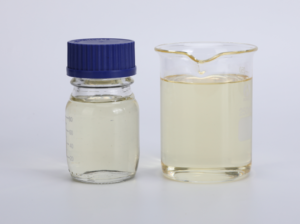
EK-D09 Introduction:
EK-D09 uses polysilazane as a film-forming agent, combined with high-temperature resistant ceramic fillers, ultrafine powders, and plastic fillers. After high-temperature curing, it transforms into an inorganic ceramic composite coating.
This high-temperature conversion forms a SI-C-N ceramic structure, creating a dense, ultra-high-temperature resistant coating on metal substrates. It can withstand long-term use in environments up to 1000°C without cracking, peeling, or discoloration. It offers wear resistance, a dense structure, and corrosion resistance.
Applicable substrates:
1. Boiler components, petrochemical blast furnaces, hot blast furnace inner and outer walls, chimneys, flues, and exhaust pipes.
2. High-temperature components and sensor components.
3. Metallurgical equipment surfaces, mold surfaces, and casting equipment surfaces.
4. Electric heating elements, tanks, boxes, heat exchangers, and radiators.
5. Small household appliances and kitchenware (fire covers, rice cookers), etc.
6. Chemical and metallurgical high-temperature components.
7.310S stainless steel, 316 stainless steel and other high temperature alloy steel materials.
Applicable temperature:
Nitrogen curing has a maximum temperature tolerance of 1300°C (metal substrate limited), and can be used for extended periods at 1000°C (metal substrate limited).
It is also resistant to flames or long-term exposure to high-temperature airflow.
The coating’s heat resistance will vary depending on the substrate’s heat resistance.
(Note: Different substrates may have different product specifications).
Product parameters:
| Coating appearance |
Gray-blue |
| Coating composition |
Two-component |
| Mixed density |
1.78-1.95g/cm³ |
| Container status |
Uniform, no lumps or sedimentation |
| Mixed color |
White/Gray |
| Mixed viscosity |
25~38s |
| Adhesion |
0 grade |
| Film hardness |
≥8H |
| Aging resistance |
30d no rust, no powdering, no cracking, no discoloration |
| Neutral salt spray resistance |
≥1000h no blistering, no rust, no shedding |
| High temperature testing |
1000℃/24h-no shedding, no cracking |
Basic construction parameters:
| Coating Solids Content (%) |
>85 |
| Theoretical Coating Volume (m²/kg) |
8-15 |
| Dry Film Thickness (µm) |
10-40 |
| Potential Working Time (h) |
12 |
| Diluents |
Alkanes, lipids, ethers, etc. |
| Flash Point (°C) |
<22 (Solvent Flash Point) |
| Volatility |
Difficult to evaporate |
| Curing Temperature (°C) |
260 |
| Curing Time (h) |
1 |
| Maximum Instantaneous Temperature Resistance (°C) |
1300 |
| Recommended Operating Temperature (°C) |
-30 to 800 |
| Storage (°C) |
0-30 |
Special Note:
This product is a two-component, heat-curing product. The mixed coating should be used within 12 hours. During extended application periods, tools should be cleaned to prevent caking. The dry film thickness should not exceed 35µm; otherwise, coating performance may be compromised.
Standard Application Procedure:
Surface Cleaning → Roughening → Cleaning and Blowing → EK-D09 Treatment → Curing
Process Description:
1. Roughening: Before coating, polish or sandblast the substrate surface to remove rust, dust, and dirt adhering to the surface. Roughening significantly affects the coating quality. Ideally, Sa2.5 and St3 grades should be free of scale (GB/T 30790.4-2014), so please pay close attention.
2. Cleaning: Use a dedicated cleaning agent or degreasing agent to remove any remaining oil, dust, and other contaminants on the roughened surface.
3. Substrate Drying: Before coating, ensure the substrate surface is dry and clean.
4. Paint Mixing: This product has two components. Take an appropriate amount of paint according to the ratio and stir thoroughly to mix evenly. Filter through 180 mesh for later use.
5. Paint Application: Laboratory spraying with a 1.0-caliber spray gun provides optimal appearance and uniformity. The cured coating exhibits a certain degree of hydrophobicity and oleophobicity, so re-application is not recommended.
6. Curing: Air curing temperature resistance is 700℃, and nitrogen curing temperature resistance is up to 1300℃ (nitrogen curing conditions can be obtained by consultation).
Product Storage:
1. Storage must comply with national regulations. The storage environment should be dry, cool, well-ventilated, and away from heat and ignition sources. The packaging container must be kept tightly closed and carefully stored.
2. The storage temperature should be maintained between 5°C and 30°C. The shelf life is 6 months.
3. Opened but unused paint must be sealed and stored.
4. Mixed but unused paint cannot be recycled and must be disposed of in accordance with local regulations.
5. Products that have exceeded their expiration date may only be used after passing testing.
Disclaimer:
The information provided above is based solely on our knowledge gained through laboratory and practical experience. Product usage is generally beyond our control, so we can only guarantee the quality of the product itself. Products may be modified to comply with local regulations, and we reserve the right to modify this specification without prior notice. Users should consult Quartz Master New Materials for specific guidance on product suitability based on their needs and specific applications.