Address
Room 2301C, 23rd Floor, Building 1, jinghu Commercial center, No, 34, Liangzhuang Street, Eri District, Zhengzhou City, Henan province
Woours
Monday to Friday: 7AM - 7PM
Weekend: 10AM - 5PM
Address
Room 2301C, 23rd Floor, Building 1, jinghu Commercial center, No, 34, Liangzhuang Street, Eri District, Zhengzhou City, Henan province
Woours
Monday to Friday: 7AM - 7PM
Weekend: 10AM - 5PM

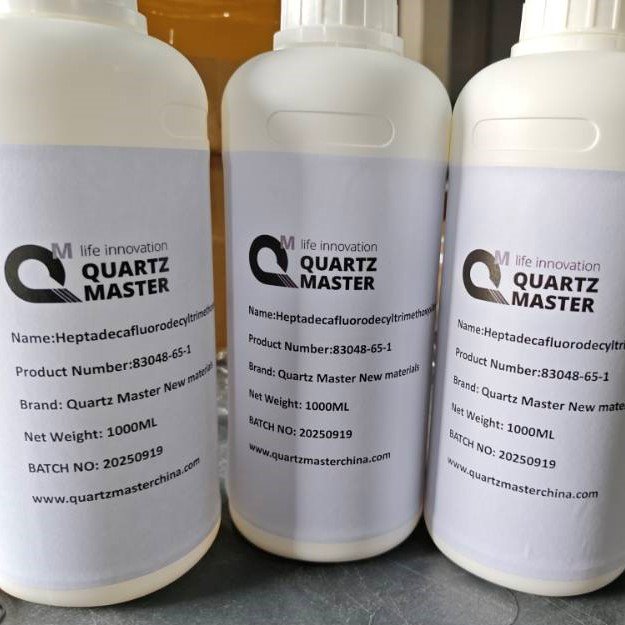
Product Overview:
1H,1H,2H,2H-Perfluorodecyltrimethoxysilane hydrolyzes faster than ethoxylated fluorosilanes, resulting in higher efficiency. Upon hydrolysis, it releases low-molecular-weight alcohols. The resulting reactive silanols chemically bond with hydroxyl, carboxyl, and oxygen-containing groups in many inorganic and organic substrates, forming self-assembled monomolecular fluorosilicone films on inorganic surfaces. The treated substrates exhibit extremely low surface energy and poor wettability, resulting in excellent hydrophobicity, oleophobicity, and antifouling properties.
How to use :
When diluted with an appropriate solvent and handled with appropriate methods, its molecules can penetrate into hard, porous inorganic substrates, providing deep, long-term, hydrophobic and antifouling protection.
1. The substrate (material) to be treated should be clean, dry, and free of dust, grease, and other contaminants.
2. Dilute the solution with a suitable solvent, such as alcohol, petroleum solvent, aromatic hydrocarbon, isoparaffin, or a mixture thereof, to an ideal concentration of approximately 0.5-2% by weight. Apply by brush or spray to the substrate surface. Avoid prolonged contact of the prepared solution with air; the container must be sealed.
3. Add 0.5% acetic acid to promote hydration during use. If necessary, add a drop or two of water with a dropper.
4. Apply evenly to the treated surface and allow sufficient curing time. Bake to 200-300°C if necessary.
5. Waterproofing and antifouling testing of the treated substrate should be performed after the cure is complete, generally after 24 hours.
6. The resulting waterproof and antifouling protective layer is completely invisible and will not cause any optical damage to the substrate.
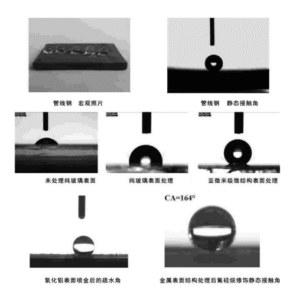
Application scope: Water-repellent and oil-repellent antifouling treatment on the surfaces of stone, glass, ceramics, white carbon black, glass fiber, etc.
Hazard Class: UN1760 8/III
Packaging: 1kg, 5kg. Custom packaging available upon request.
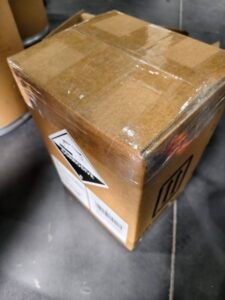
Transportation and Storage: Protect from impact, crushing, and direct sunlight during transportation. Transport as general hazardous materials. Store sealed in a cool, dry, well-ventilated area. Keep away from moisture and water, and away from sources of fire and heat. Moisture-proof is essential!