Address
Room 2301C, 23rd Floor, Building 1, jinghu Commercial center, No, 34, Liangzhuang Street, Eri District, Zhengzhou City, Henan province
Woours
Monday to Friday: 7AM - 7PM
Weekend: 10AM - 5PM
Address
Room 2301C, 23rd Floor, Building 1, jinghu Commercial center, No, 34, Liangzhuang Street, Eri District, Zhengzhou City, Henan province
Woours
Monday to Friday: 7AM - 7PM
Weekend: 10AM - 5PM


We’ve heard a lot about organic polymers, but do you know about inorganic polymers?
It’s polysilazane, the leading ultra-high-temperature coating material.
What are the main characteristics of polysilazane?
Its molecular backbone is composed of Si-N bonds. These bonds have a small angle, creating a tight “pull” between the molecules, making it difficult for the chain to coil into a ring. This makes disruptive side reactions such as rearrangement less likely to occur during polymerization.
The difference in electronegativity between Si and N makes the Si-N bond somewhat ionic, which significantly differs from the properties of similarly structured hydrocarbons.
Furthermore, Si-N bonds are weak, with a bond energy of only approximately 355 kJ/mol, making them easily transformed into other chemical bonds.
Furthermore, the Si-N, Si-H, and N-H bonds in polysilazane are particularly reactive, undergoing hydrolysis and condensation reactions with a wide range of substances, including water and alcohols, resulting in extremely high chemical activity.
However, polysilazanes are currently far less widely used than polysiloxanes.
This is primarily due to the imperfect preparation methods, the complex molecular structure of the products, and their generally low molecular weight. Furthermore, they are highly reactive and readily react with polar molecules in the environment, making their storage and transportation difficult.
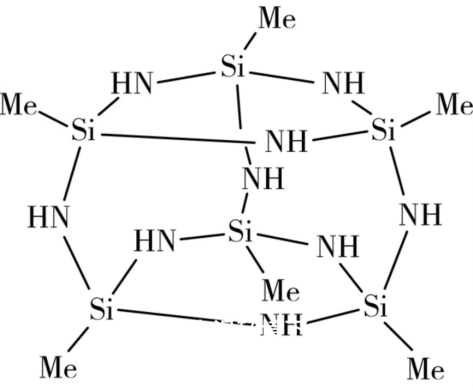
It has a high-temperature resistance range of 400-1300°C and can be decomposed into SiCN, SiCNO, or silica ceramics under high-temperature conditions, achieving a hardness of 8H or higher after curing.
It also exhibits excellent chemical stability, maintaining structural integrity in acidic and alkaline environments, high-energy radiation, and salt spray conditions. Its dielectric strength is ≥10⁵V/mm, making it suitable for electronic insulation applications.
Since its first synthesis in 1921 through the ammonia decomposition of chlorosilanes with ammonia, this material has long been plagued by difficulties in storage and transportation, as well as uneven product molecular weight distribution, due to its high reactivity and difficult-to-control preparation process. In the 1990s, a technological breakthrough in the preparation of Si-B-C-N ceramics by introducing boron advanced research into modified polysilazanes.
Core application areas of polysilazane
1.Insulating coatings in semiconductor manufacturing
In chip production with a process technology below 5nm, polysilazane, as an insulating layer material, can achieve efficient electromagnetic shielding at the nanoscale.
Currently, high-end products are primarily supplied by companies such as Japan’s Shin-Etsu and Switzerland’s Clariant. However, the PSN series products from the Institute of Chemistry of the Chinese Academy of Sciences have already achieved low- and mid-range substitution and are being used in Yangtze Memory Technologies’ 3D NAND chip manufacturing.
2.Protective materials in photovoltaic and aerospace fields
Photovoltaic Module Applications: Photovoltaic panels treated with polysilazane coatings showed no discoloration or cracking after being subjected to a high temperature of 800°C for 24 hours and then subjected to a water quench test. Their weather resistance is over three times greater than that of traditional materials.
Aerospace Material Applications: Their radiation resistance can meet the requirements for satellite components to operate in space for over 20 years. A similar material system is used in the sensor housing of NASA’s Mars Rover Perseverance. Si-C-N ceramic-based composites are also used in the throat lining of SpaceX’s Starship engines.
3.High temperature protection of aircraft engines
The SiCN ceramic coating generated by the decomposition of polysilazane can withstand instantaneous high temperatures above 3000°C. It is currently used to protect the surface of aircraft engine turbine blades, allowing the components to maintain stable operation under working conditions of 1200°C.
Technological barriers and progress in domestic substitution
1.International Technology Monopoly
In the global polysilazane market, companies like Clariant of Switzerland and Toray of Japan hold over 90% of the high-end product market share. Their core technology lies in the high-purity synthesis of perhydropolysilazane (PHPS), with purity control required to exceed 99.999%.
In the field of hydrogen fuel cells, polysilazane-modified proton exchange membranes can increase operating temperatures from 80°C to 180°C. Road trials of the relevant coating have begun on the new generation Toyota Mirai, aiming to increase fuel cell efficiency by 15%.
2.Difficulties in the synthesis process
The reaction conditions are demanding: During the polymerization process, the temperature must be controlled within a ±2°C range, and the catalyst ratio must not exceed a 0.1% error. Failure to do so can easily lead to Si-N bond breakage and product performance degradation.
Post-processing is complex: Because polysilazane is sensitive to water and oxygen, the purification process must be carried out in an inert atmosphere, increasing production costs.
3.Domestic technological breakthroughs
A 600°C heat-resistant coating developed by China Shipbuilding Industry Corporation (CSIC) has been applied to the anti-skid layer of aircraft carrier decks.
By introducing moisture-responsive functional groups, domestic researchers have developed a polysilazane coating that automatically triggers a ceramicization reaction when cracks develop. This technology is expected to be applied in spacecraft hull protection by 2025.
A company in Xi’an has produced Si-C-N ceramic fibers with a tensile strength of 3.2 GPa, approaching the 4.5 GPa achieved by Toray Industries, Japan. However, there are still gaps in fiber diameter uniformity and surface finish.
The strategic value of materials technology
Polysilazane, a typical bottleneck material, requires technological breakthroughs across the entire supply chain, from molecular design and synthesis to engineering applications. While domestic substitution has been achieved in the medium-temperature range, 1300°C-grade aerospace materials remain dependent on imports.
It is expected that through 5-8 years of technological research and development, we will achieve independent control of high-end polysilazane materials, providing key material support for strategic sectors such as chip manufacturing and aerospace engineering.
#polysilazane #specialtymaterials #newmaterials #polymermaterials