Address
Room 2301C, 23rd Floor, Building 1, jinghu Commercial center, No, 34, Liangzhuang Street, Eri District, Zhengzhou City, Henan province
Woours
Monday to Friday: 7AM - 7PM
Weekend: 10AM - 5PM
Address
Room 2301C, 23rd Floor, Building 1, jinghu Commercial center, No, 34, Liangzhuang Street, Eri District, Zhengzhou City, Henan province
Woours
Monday to Friday: 7AM - 7PM
Weekend: 10AM - 5PM

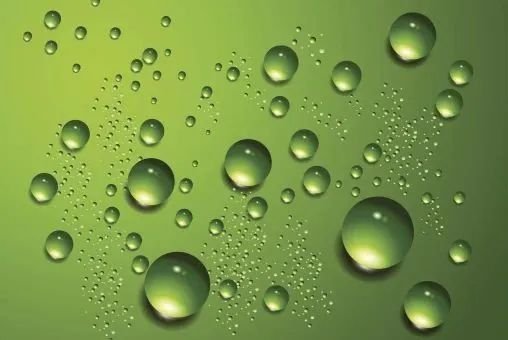
Superhydrophobic coatings—solid surface coatings with a water contact angle (WCA) greater than 150° and a sliding angle (SA) or contact angle hysteresis (CAH) less than 10°—have attracted significant attention for their unique surface wetting properties.
With the increasing strategic value of materials science and surface technology in various fields, the research and development of superhydrophobic coatings and their widespread application are becoming increasingly widespread. From energy facilities, buildings, aircraft, and vehicles to optical equipment, clothing accessories, precision instruments, and even masks and protective clothing, superhydrophobic coatings are indispensable.
Advantages of superhydrophobic coatings
1). Anti-fouling and self-cleaning
Superhydrophobic coatings have attracted considerable attention for their unique self-cleaning properties. Their mechanism of action is primarily manifested in the following aspects:
First, on low-surface-energy, rough surfaces, the actual contact area between contaminants (such as dust particles) and the superhydrophobic surface is minimal, significantly reducing the adhesion between the two.
Second, as water droplets roll across the surface, they effectively capture and envelop these contaminants, carrying them off the surface as they roll, thus achieving a self-cleaning effect.
Third, external forces such as gravity and wind can synergistically promote the removal of contaminants.
These excellent antifouling and self-cleaning properties have led to their widespread application in a variety of fields, particularly in critical applications susceptible to contamination, such as photovoltaic panels, electronic device screens, and building facades.
2). Anti-icing and de-icing
Icing can significantly impact the operation of aircraft, wind turbine blades, power transmission lines, and other equipment. If a surface is treated with a superhydrophobic coating, ice crystals that fall onto it will quickly slide off due to gravity or airflow, preventing them from forming and accumulating on the surface, thus preventing accidents. Furthermore, many researchers have combined superhydrophobic coatings with photothermal materials or phase change materials, giving them the ability to actively remove ice.

3). Oil-water separation
Water separation is an important environmental management technology. Its traditional separation mechanism relies primarily on gravity, exploiting the inherent difference in surface wettability between water and oil phases. Most superhydrophobic surfaces are both hydrophobic and lipophilic, allowing oily liquids to pass through while blocking the water phase, thus achieving efficient oil-water separation.
With the increasing discharge of industrial oily wastewater and the frequent occurrence of marine oil spills, the development of efficient oil-water separation technologies has become a critical issue in environmental engineering. However, many traditional oil-water separation methods, such as flotation, centrifugation, and filtration, suffer from complex process flows, high energy consumption, and limited separation efficiency. Therefore, the development of new materials with controllable wettability, such as superhydrophobic coatings, is of great significance in the field of oil-water separation.
4). Anti-fog
By creating a hierarchical micro-nanostructure on a surface, researchers have been able to create high contact angles and low rolling angles for water droplets, prompting any condensed water droplets to roll off the surface quickly. This property effectively prevents water droplets from adhering to and aggregating on the surface, thus avoiding blurred vision caused by light scattering and reflection from fog droplets.
In practical applications, the anti-fog properties of superhydrophobic coatings have been widely used in a variety of important areas. For example, on optical surfaces such as automotive windshields, eyeglass lenses, and solar panels, superhydrophobic coatings effectively prevent fog formation, maintaining excellent light transmittance and visual clarity. Furthermore, the self-cleaning properties of superhydrophobic coatings allow falling water droplets to remove surface dust, further enhancing the anti-fog effect.
5). Anti-corrosion
Corrosion-resistant superhydrophobic coatings utilize the synergistic effects of low-surface-energy chemical components and a micro-nano composite structure to create a multi-layered protection system.
First, the low surface energy imparts superhydrophobicity to the coating, significantly reducing the infiltration and adhesion of corrosive media (such as water and electrolytes).
Second, the micron-nanoscale hierarchical roughness enhances hydrophobicity through a “lotus effect,” while leveraging the self-cleaning properties of rolling water droplets to continuously remove surface contaminants.
Third, the coating’s dense physical barrier effectively blocks the penetration of corrosive agents. This synergistic mechanism of “hydrophobic barrier, self-cleaning, and physical shielding” provides long-term protection in severely corrosive marine environments, industrial environments with severe corrosion, and infrastructure.

Improved durability of superhydrophobic coatings
Although superhydrophobic coatings have demonstrated excellent performance in a variety of scenarios, their high dependence on fine surface micro-nanostructures results in poor wear resistance, durability, and aging resistance in practical applications, hindering their large-scale application. To improve their durability, various improvements have been proposed.
1). Give self-repair capabilities
Superhydrophobic coatings with self-healing properties can recover their superhydrophobicity either spontaneously or under certain external forces after mechanical wear. This self-healing ability can be achieved through chemical or physical mechanisms within the material and is primarily categorized as either externally assisted or intrinsic.
Externally assisted self-healing coatings mainly add microcapsules wrapped with repair agents, shape memory materials and other substances into the coating, so that when the super-hydrophobic coating is subjected to mechanical wear, some dynamic forces (such as temperature, pH, light, etc.) trigger the microcapsules to release the repair agent or shape memory polymer to restore the structure of the coating and maintain the super-hydrophobic properties.
Intrinsic self-healing requires no additional repair agents or catalysts. External stimuli (such as light, heat, and pH) allow the damaged surface to self-repair through dynamic, reversible covalent bonds or physical interactions within the system, thereby maintaining the coating’s essential properties. Covalent self-healing mechanisms primarily include disulfide bonds, Diels-Alder reactions, and imine bonds, while non-covalent self-healing mechanisms primarily include hydrogen bonds and metal coordination bonds.

2). Constructing multi-level micro-nanostructures
Micro-nanostructures are essential for achieving super-hydrophobic surfaces. However, single-layer micro-nanostructures are fragile and quickly fail after mechanical wear, resulting in poor coating durability. Multi-layered micro-nanostructures not only increase the thickness of the super-hydrophobic surface but also increase its roughness, thereby enhancing super-hydrophobicity.
More complex surface micro-nanostructures can extend the lifespan of super-hydrophobic coatings to a certain extent. Typically, micro-nanoparticles are sprayed onto an already existing micro-nanostructure to create a richer structure. This allows the coating to maintain similar roughness before and after wear, maintaining the coating’s super-hydrophobicity while also improving its durability.
3). Introducing a protective structure
The micro-nanostructure of a superhydrophobic coating can enhance durability by creating a protective structure. Through specific material or structural design, a protective shell or skeleton is provided for the micro-nanostructure. This structure can disperse the stress on the nanoparticles in the coating, reduce external mechanical wear, and significantly enhance the stability and durability of the micro-nanostructure while maintaining the superhydrophobic properties of the coating.
4). Increase cross-linking density
Increasing the crosslink density, to a certain extent, can make the molecular chains on the coating surface more tightly connected, and the micro-nanostructures are also more tightly coated, improving the mechanical strength and wear resistance of the coating, and extending the service life of the super-hydrophobic coating. In particular, coatings with covalent self-healing capabilities can also increase crosslinking points through dynamic covalent bonds, thereby increasing the crosslink density. Combined with the self-healing ability, this further improves the durability of the super-hydrophobic coating.
5) Adding layered or rigid materials
Layered materials (such as graphene and hexagonal boron nitride) have weak interlayer forces and possess a certain lubricating effect. This allows for translational movement between layers during mechanical wear, dissipating frictional stress and, to a certain extent, reducing mechanical wear damage to superhydrophobic coatings.
Rigid materials (such as carbon nanotubes) possess excellent mechanical stability. When incorporated into coatings, they impart a structure similar to reinforced concrete, enhancing the mechanical stability of superhydrophobic coatings. Both materials can improve the durability of superhydrophobic coatings, and some modified materials can even enhance other properties.