Industrial Metal Protection
Protect industrial metal parts and equipment against combined corrosion, chemical attack, wear and heat with polysilazane-based coating systems. We don’t promise a universal result — we recommend a specific grade for your parts and operating conditions, confirmed in the TDS and by a sample.

Recommended products
Proposed starting points — the final recommendation for your case follows technical review.

EK-1800
→
UV-curing polysilazane resin
Solvent-free UV-curing polysilazane; 80–85% ceramic yield, withstands 1000 °C peaks after ceramisation.
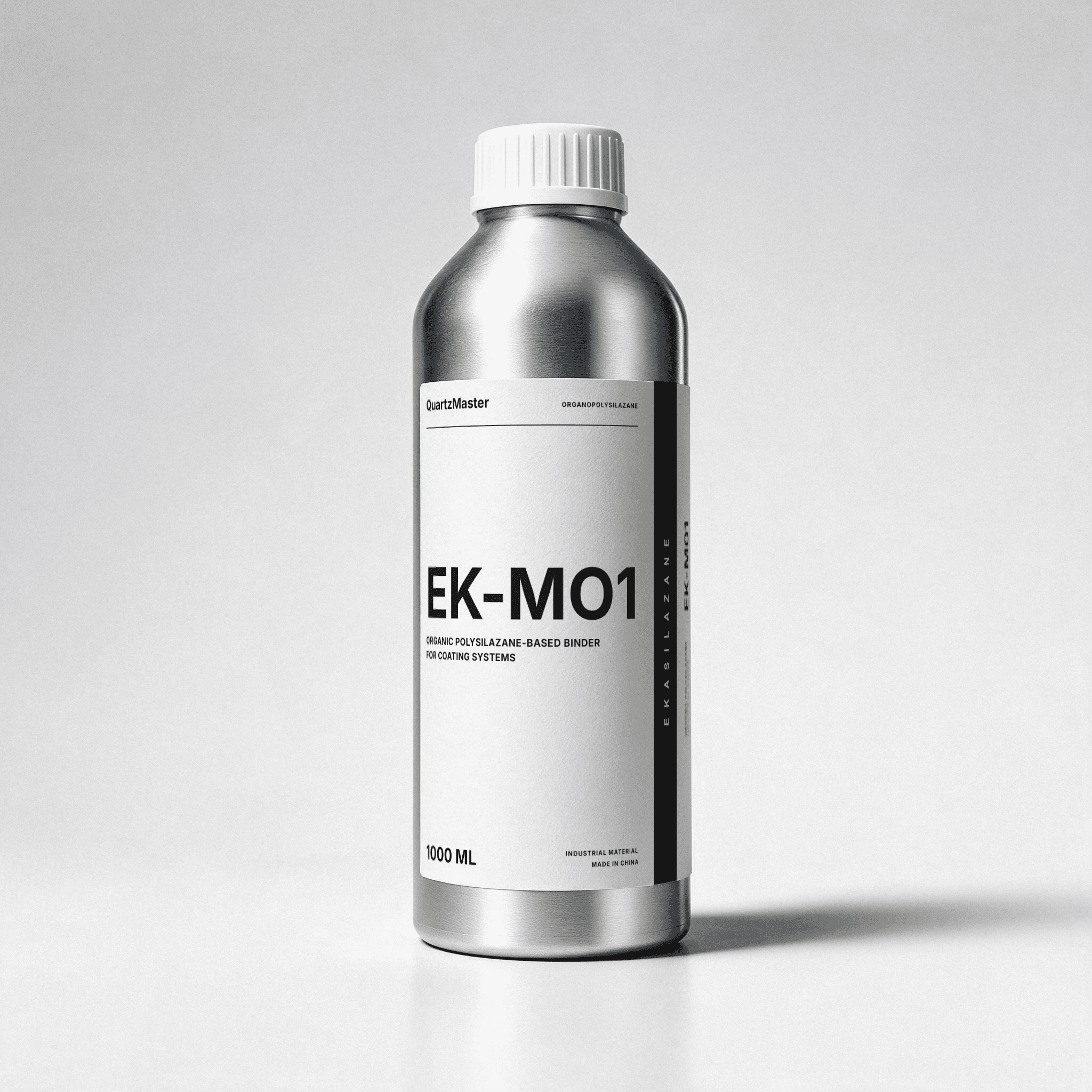
EK-M01
→
Epoxy-modified silazane coating
Paint and coating protection; room-temperature application, short-term up to 500 °C.

EK-M06
→
One-component polyester-modified polysilazane resin
Polyester-modified polysilazane resin addressing toughness and bend resistance.

EK-S05
→
High-molecular polysilazane binder
Binder for steel coating systems; precursor for SiCN, SiCNO and SiO2 ceramics.

EK-S07
→
High- and low-temperature heavy-duty anticorrosive fluorosilicone coating
Heavy-duty anti-corrosion resin with low-temperature application; fiber sizing agent.

EK-S1000
→
High-viscosity polysilazane for thick-film industrial coatings
High-viscosity heat-curing polysilazane for films 0.1–0.4 mm thick; 1000 °C peak service after ceramisation.

EK-S13
→
High- and low-temperature resistant anticorrosive coating
One-component anticorrosive coating: 5000 h salt spray, −50…280 °C service.

EK-S1303
→
Solvent-based polysilazane, full cure in one day
Solvent-based low-viscosity polysilazane with the fastest full cure in the range — one day — and contact angle 105–110°.

EK-S1502
→
Solvent-based ultra-fast-curing polysilazane resin
Solvent-based low-viscosity polysilazane; tack-free in 20–30 minutes, 7–8H hardness, water contact angle 98–104°.

MIR 336 Metal · Transparent
→
Ready-to-use polysilazane coating for metal
Protective coating against oxidation and corrosion for copper, brass, bronze, stainless steel, aluminium and silver. Transparent gloss finish.

MIR 336 Matt
→
Ready-to-use polysilazane coating for stone and metal — matt
Protective coating for stone and metal with a matt finish; repels water, oil and dirt and protects against oxidation and corrosion.
MIR 336 Semi-matt
→
Ready-to-use polysilazane coating for stone and metal — semi-matt
Protective coating for stone and metal with a semi-matt finish; repels water, oil and dirt and protects against oxidation and corrosion.

MIR 337 Metal · Transparent
→
Ultra-thin polysilazane coating for polished metal
Transparent coating for polished and mirror-finish metal; applied with polishing to a 0.1 µm film that leaves the reflection untouched.

MIR 337 Matt
→
Ultra-thin polysilazane coating for stone and metal — matt
Ultra-thin coating for stone and metal with a matt finish; applied with polishing to a 0.1 µm film.
MIR 337 Semi-matt
→
Ultra-thin polysilazane coating for stone and metal — semi-matt
Ultra-thin coating for stone and metal with a semi-matt finish; applied with polishing to a 0.1 µm film.

MIR Antigraffiti
→
Ready-to-use anti-graffiti coating with a self-cleaning effect
Transparent anti-graffiti coating for metal, stone, concrete, painted surfaces and composites; cleaned repeatedly without recoating. Transparent or matte.
The challenge
Recognise the multi-stress duty your equipment faces — and what it costs when protection gives out.
Corrosion, aggressive chemicals, abrasion and heat rarely act alone — they degrade industrial metal parts together, continuously. When protection fails, the cost is not just recoating — it is downtime, part replacement and stalled production.
Conventional organic paints have limits under combined mechanical, chemical and thermal stress. Silazane-based systems form a dense protective layer designed for longer service on hard-worked equipment — the right grade and film build are confirmed during technical review.
Typical situations
Corrosive process fluids, salts and condensation attacking metal
Chemical exposure — acids, alkalis and solvents in process plants
Abrasion and wear on moving or handling equipment
Pumps, valves, tanks, machinery, tooling and structural metal
How the protection works
Ceramic protection layer
Dense barrier against corrosion, chemicals, wear and heat
Polysilazane layer
Adhesion, curing and surface conversion
Substrate
Carbon steel, stainless, cast iron or alloy parts
Requirements
Properties that matter for industrial metal protection — availability depends on product grade and is confirmed in the TDS.
Corrosion resistance
Dense layer limiting moisture, salt and ion attack on metal.
Chemical resistance
Withstands acids, alkalis and solvents — per grade.
Adhesion to metal
Reliable bonding to prepared steel, iron and alloy surfaces.
Wear & abrasion resistance
Keeps the barrier intact under mechanical load and handling.
Thermal tolerance
Where operating heat is part of the duty.
Long-term durability
Designed for extended service under combined stress — validated on your parts.
Substrates & industries
Where these systems are typically applied. Compatibility is confirmed per grade — not guaranteed generically.
Typical substrates
Carbon and stainless steel
Cast iron and alloy components
Pumps, valves and process equipment
Prepared / primed surfaces per guide
Typical industries
Chemical and process industry
Mining and heavy industry
Energy and utilities
General manufacturing and tooling
FAQ
Common questions about industrial metal protection projects.
Can the coating be applied to worn or already corroded parts?
Surface preparation requirements — including rust and contaminant removal — are defined in the Application Guide. The condition of your parts is assessed during technical review.
How is this different from conventional protective paint?
Silazane-based systems form a dense ceramic-like layer designed for combined corrosion, chemical, wear and thermal stress. Comparative data for a specific grade is available on request.
How long will the protection last on hard-worked equipment?
Service life depends on the operating stresses, film build and application quality — we validate it on your parts through sample testing rather than promising generic numbers.
Which product should I start with?
Send your parts, operating conditions and process — our team will recommend a grade and provide the TDS. Custom formulation is possible subject to technical review.
Can I test before committing to volume?
Yes — sample support is available for qualified B2B projects after a short technical review.
What about MOQ and pricing?
Both depend on the grade, packaging and volume — include your estimated quantity in the request and a quotation follows the technical review.
Send request
From first enquiry to qualified bulk supply — send your requirements below.
01
Send requirement
Application, substrate and performance target.
02
Get recommendation
Suitable material family and product grade.
03
Receive TDS/SDS, catalog & sample
Documentation and sample for evaluation.
04
Test material
Validate on your substrate and process.
05
Confirm & bulk supply
Specification agreement and ongoing supply.
About industrial metal protection
Industrial metal protection coatings shield pumps, valves, tanks, machinery and tooling against combined corrosion, chemical attack, wear and heat in demanding plants. Polysilazane-based systems form a dense protective layer for multi-stress service conditions.
Product selection depends on the parts, operating stresses and application process. Technical data sheets, application guides and sample support are provided on request for each product grade.
1280