Electronics & Energy
Protect electronic components and energy systems against moisture, contamination and electrical leakage with polysilazane-based coating systems. We don’t promise a universal result — we recommend a specific material for your parts and operating environment, confirmed by documentation and a sample.

Recommended products
Proposed starting points — the final recommendation for your case follows technical review.
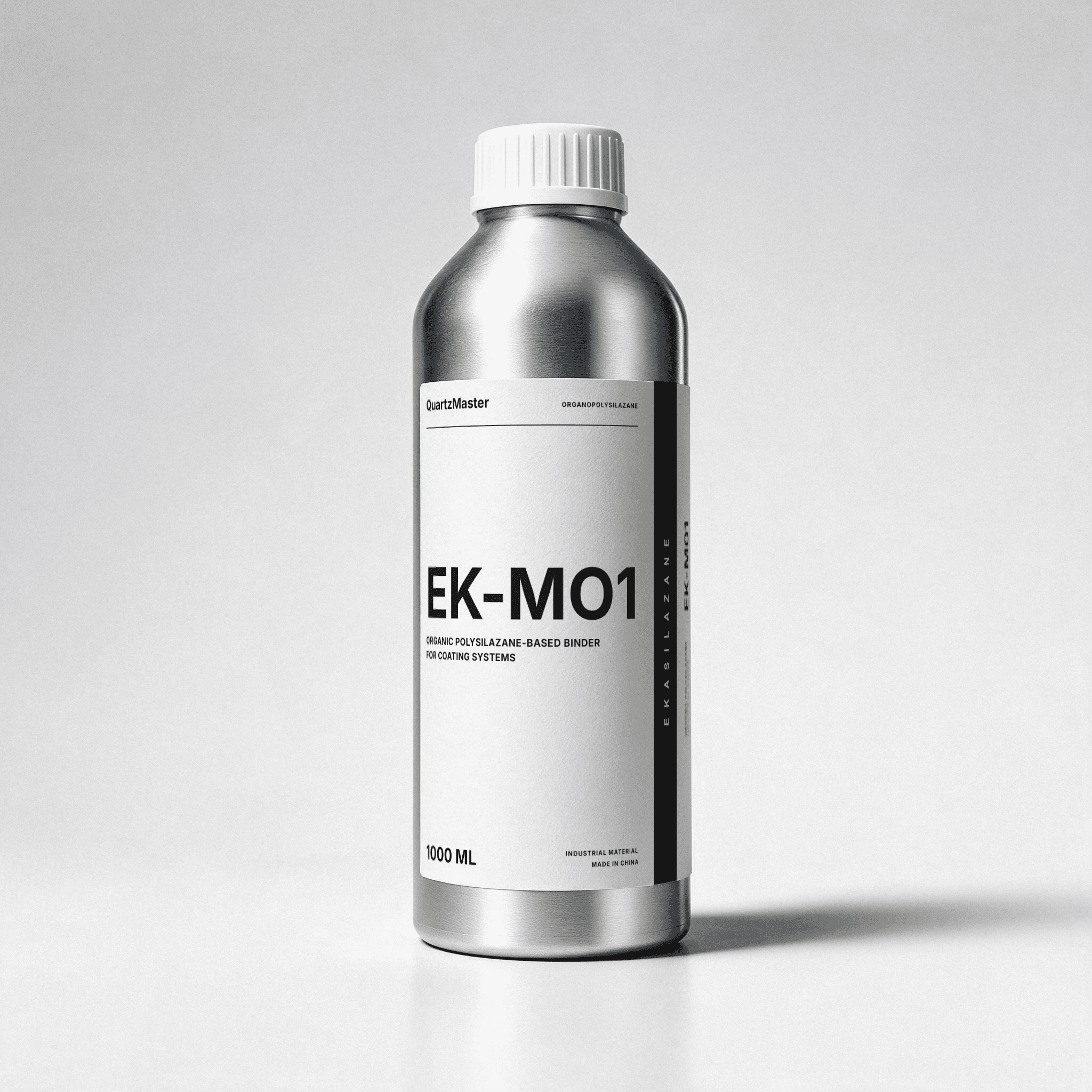
EK-M01
→
High-temperature encapsulation compound (250–500 °C)
EK-M01 grade for potting and encapsulation at 250–500 °C.

EK-M10
→
High-toughness silicone-rubber-modified polysilazane resin (insulating, voltage-resistant)
One-component high-toughness insulating resin: ≥10⁵ V/mm; above 400–520 °C service.

EK-M102
→
Fluorine-modified polysilazane, 28–30% fluorine
Fluorine-modified polysilazane from the methyl trifluoropropyl series; 28–30% fluorine, water contact angle 105–110°.

EK-M103
→
Fluorine-modified polysilazane, 55–60% fluorine
Highest-fluorine grade in the range — 55–60% fluorine and a water contact angle of 110–120° for superhydrophobic surfaces.

EK-M14
→
Hydrophobic anti-fingerprint silicone-modified resin
Nanotech-functionalized polysilazane resin; anti-fingerprint applications.

EK-S03
→
High-temperature curing agent (methylhydrogen polysilazane)
Methylhydrogen polysilazane (MW >8×10⁴) — high-temperature curing agent and crosslinker.

EK-S04
→
Methylvinylsilazane
Low-molecular silazane — amine curing agent and modifier for epoxy, alkyd, acrylic resins.

EK-S05
→
High-molecular polysilazane binder
Binder for steel coating systems; precursor for SiCN, SiCNO and SiO2 ceramics.

EK-S08
→
Solid polysilazane resin, high-temperature curing
Solid resin for ceramic-precursor routes, flame-retardant systems and HT adhesives.
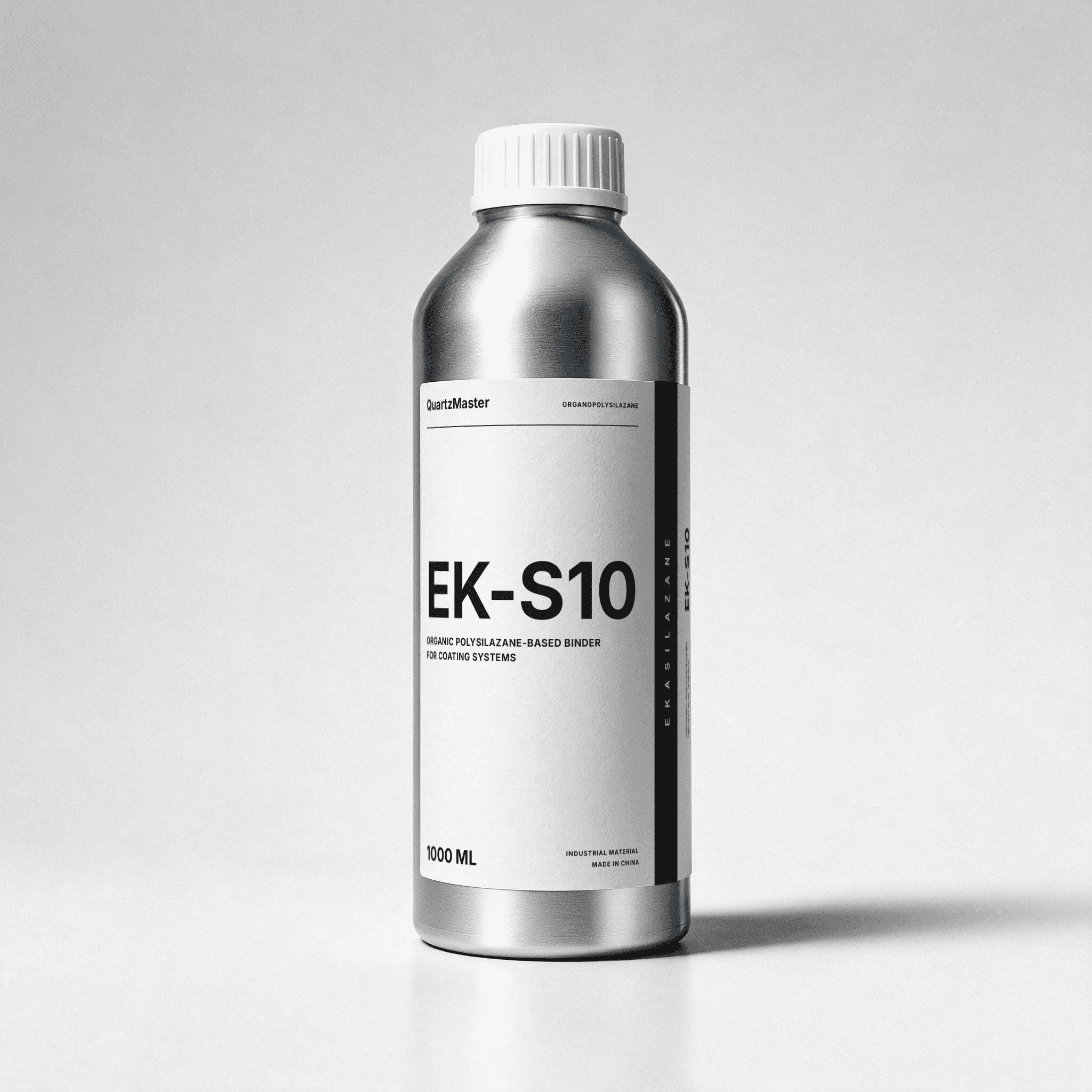
EK-S10
→
Polyaluminosilazane resin
Polyaluminosilazane resin; >75% ceramic yield, also for ceramic-precursor routes.

EK-S11
→
Low-molecular methylhydrogen polysilazane
Low-molecular polysilazane (MW 177–591) for composites, impregnation and thin films.

EK-S1503
→
Solvent-free flexible polysilazane resin
Solvent-free flexible polysilazane for coatings that must bend without cracking — plastics and wind turbine blades.

EK-S8002
→
Trimethyltrivinylcyclotrisilazane, CAS 5505-72-6
Vinyl-functional cyclic silazane monomer; trimer ≥95%, used as a battery electrolyte additive and polysilazane precursor.

EK-S8003
→
Hexamethyldisilazane (HMDS), CAS 999-97-3
Ultra-high-purity HMDS, assay ≥99.5% and chloride ≤10 ppm; silylating agent and photoresist adhesion promoter.

EK-S8004
→
Tetramethyldivinyldisilazane, CAS 7691-02-3
Vinyl-functional silazane monomer, assay ≥99.0% and chloride ≤10 ppm; filler modification for liquid silicone rubber.

EK-SiBCN
→
Boron-modified polysilazane for wave-transparent and 1700 °C coatings
Boron-modified polysilazane rated to 1700 °C with wave-transparent properties and high-temperature self-healing; two viscosity grades.

PHPS
→
Perhydropolysilazane
Inorganic polysilazane precursor forming pure SiO2 / glass-ceramic layers.

Polycarbosilane
→
Polycarbosilane (PCS)
Preceramic precursor for silicon carbide ceramics and SiC fibers.

SiC Fibers
→
Continuous silicon carbide fibers
Continuous SiC fiber for high-temperature composite reinforcement.
The challenge
Recognise your situation — and what it costs when protection fails.
Moisture, contamination and heat stress sensitive electronics and energy systems continuously. When a protective layer fails, the cost is not just rework — it is field returns, component replacement and reliability risk.
Conventional conformal coatings have limits under heat and humidity. Silazane-based systems form a dense, thin protective layer designed for longer service in these conditions — the right grade and film build are confirmed during technical review.
Typical situations
Humid and condensing environments — moisture and contamination
High-density electronics — electrical leakage and shorting
Power modules and semiconductors under thermal load
Batteries, connectors and energy storage systems
How the protection works
Ceramic protection layer
Dense barrier against moisture and contamination
Polysilazane layer
Adhesion, curing and surface conversion
Substrate
Silicon, metal, ceramic or polymer surface
Requirements
Properties that matter for electronics and energy protection — availability depends on product grade and is confirmed in the TDS.
Barrier against moisture
Thin dense film limiting moisture and contamination ingress.
Electrical insulation
Dielectric behaviour supporting electrical isolation — per grade.
Adhesion to substrates
Reliable bonding to prepared electronic substrates.
Thin uniform films
Even coverage over fine features and edges.
Thermal stability
Where operating heat is part of the environment.
Long-term durability
Designed for extended service — validated on your parts.
Substrates & industries
Where these systems are typically applied. Compatibility is confirmed per grade — not guaranteed generically.
Typical substrates
Silicon and semiconductor dies
Metal contacts and connectors
Prepared / primed surfaces per guide
Typical industries
Consumer and industrial electronics
Power electronics and modules
Batteries and energy storage
EV and e-mobility systems
FAQ
Common questions about electronics and energy coating projects.
Can the coating be applied over populated boards and components?
Surface preparation and masking requirements are defined in the Application Guide. The condition of your parts is assessed during technical review.
How is this different from a conventional conformal coating?
Silazane-based systems form a dense, thin ceramic-like layer designed for demanding electronic environments. Comparative data for a specific grade is available on request.
How long will the protection last?
Service life depends on the operating environment, film build and application quality — we validate it on your parts through sample testing rather than promising generic numbers.
Which product should I start with?
Send your components, operating environment and process — our team will recommend a grade and provide the TDS. Custom formulation is possible subject to technical review.
Can I test before committing to volume?
Yes — sample support is available for qualified B2B projects after a short technical review.
What about MOQ and pricing?
Both depend on the grade, packaging and volume — include your estimated quantity in the request and a quotation follows the technical review.
Send request
From first enquiry to qualified bulk supply — send your requirements below.
01
Send requirement
Application, substrate and performance target.
02
Get recommendation
Suitable material family and product grade.
03
Receive TDS/SDS, catalog & sample
Documentation and sample for evaluation.
04
Test material
Validate on your substrate and process.
05
Confirm & bulk supply
Specification agreement and ongoing supply.
About electronics & energy
Electronics and energy coatings protect components and power systems against moisture, contamination and heat. Polysilazane-based systems form a dense, thin protective layer with electrical insulation for demanding service conditions.
Product selection depends on the components, operating environment and application process. Technical data sheets, application guides and sample support are provided on request for each product grade.